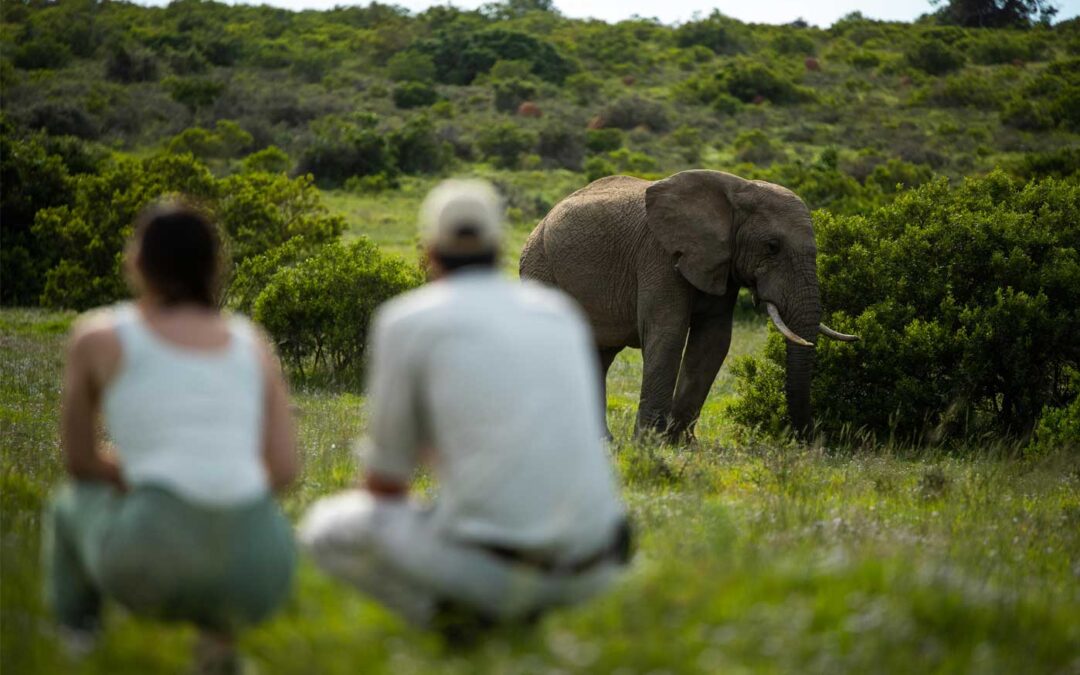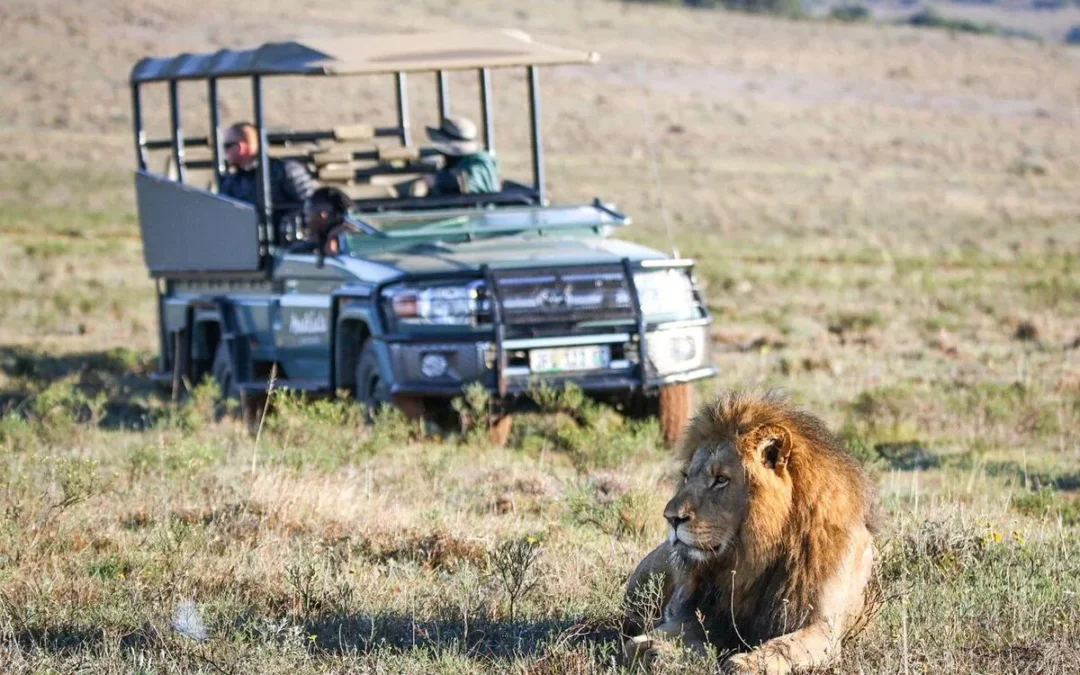
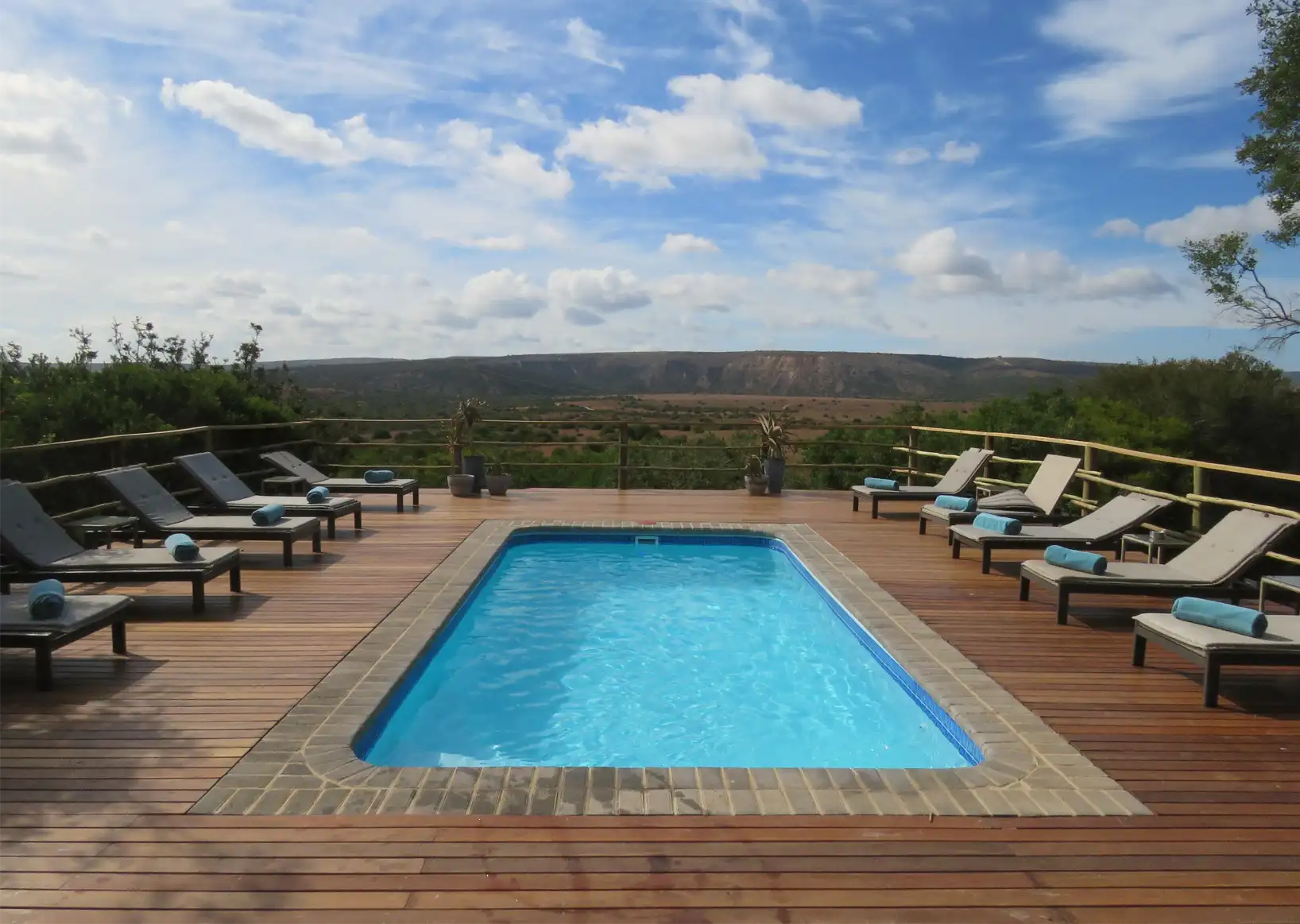
Amakhala Game Reserve, set in South Africa’s Eastern Cape approximately 45 minutes from Port Elizabeth (Gqeberha), is home to eleven privately operated lodges that collectively offer Big Five game viewing in a completely malaria-free environment. For travellers weighing Amakhala against Greater Kruger or KwaZulu-Natal alternatives, the decisive facts are these: every lodge here operates across the same unfenced ~7,000-hectare reserve, the Eastern Cape is one of Africa’s most important remaining rhino strongholds, and the compact size means guests consistently encounter all of the Big Five without the long transit drives characteristic of larger parks.
Key Takeaways
- Malaria-free Big Five — Amakhala is one of South Africa’s premier malaria-free reserves, making it safe for families, children, and travellers who cannot take prophylaxis.
- ~45 minutes from Port Elizabeth (Gqeberha) — no internal flight required; the reserve is the ideal 2–3 night extension to a Cape Town or Garden Route itinerary.
- Eleven lodges across one unfenced reserve — from exclusive-use bush estates to classic tented camps, every option shares the same wildlife-rich traversing area.
- Eastern Cape rhino stronghold — close white rhino approaches are regularly achieved; the region is a nationally significant conservation area for the species.
- Compact ~7,000 ha means efficient game viewing — guests typically encounter Big Five within the first day; the reserve’s size eliminates unproductive driving time.
- Price range is broad — Amakhala caters to diverse budgets, from tented camps to the five-star flagship Bukela Game Lodge, all with inclusive game drives.
What Makes Amakhala Game Reserve Different from Other Big Five Destinations?
Amakhala’s most significant competitive advantage is its malaria-free status combined with genuine Big Five wildlife — a combination rarer than most travellers realise. The Eastern Cape’s cooler, drier climate supports no viable malaria-transmitting mosquito population, removing both the health risk and the cost of antimalarial medication. This is not the case in Kruger, Sabi Sands, Timbavati, or KwaZulu-Natal, all of which carry varying malarial risk depending on season.
The reserve was formed through a consortium of former farmland owners who collectively rehabilitated the land and reintroduced wildlife — a model that now covers approximately 7,000 hectares of Eastern Cape bushveld. Unlike the vast Greater Kruger ecosystem, Amakhala’s compact footprint is a deliberate advantage: the Big Five are resident year-round, game drives are productive from day one, and rangers can locate specific animals — including rhino — with relative reliability. The Eastern Cape’s terrain is dramatically varied, combining thicket, open plains, riverine forest, and rocky ridges, giving each drive a visually distinct character.
Which Are the Best Lodges at Amakhala Game Reserve?
Amakhala has eleven lodges, and the right choice depends on group size, budget, and the kind of experience you are looking for. Below is an honest breakdown of the most significant properties.
Bukela Game Lodge — The Five-Star Flagship
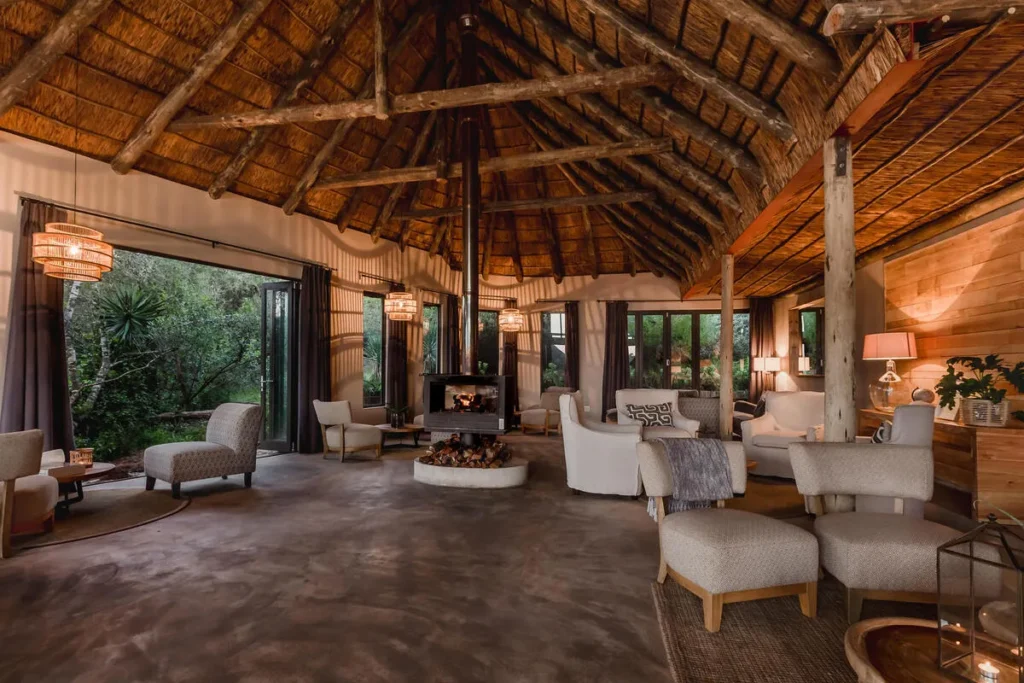
Bukela Game Lodge is Amakhala’s premium offering and is available exclusively for private groups. It operates as a standalone private lodge with its own rangers, chef, and dedicated game-viewing vehicles — meaning your group is the only party on every drive. The lodge sits on elevated ground with sweeping views across the reserve’s bushveld, and its interiors combine classic safari style with serious levels of comfort: plunge pools, outdoor showers, and open-plan suites designed for the Eastern Cape climate.
For families, honeymooners, or small corporate groups who want the Amakhala experience without sharing it with other guests, Bukela is the benchmark. It is the lodge that consistently earns the highest repeat-booking rate at Amakhala and is best booked well in advance, particularly for school-holiday windows.
Hlosi Game Lodge — Best for Families
Hlosi Game Lodge is frequently cited as Amakhala’s best all-round family lodge. It accommodates children of all ages — a meaningful point, since several rival reserves impose minimum age restrictions that can frustrate mixed-generation travel. Hlosi’s position within the reserve gives it excellent game-viewing access, and its design blends open-air safari aesthetics with the practical features that travelling families need: a pool, spacious accommodation, and rangers who are accustomed to engaging younger guests.
The lodge’s name means “hamerkop” in Xhosa, nodding to the Eastern Cape’s exceptional birdlife — Amakhala is not only a Big Five destination but a rewarding birding circuit for the 300+ species recorded across the reserve.
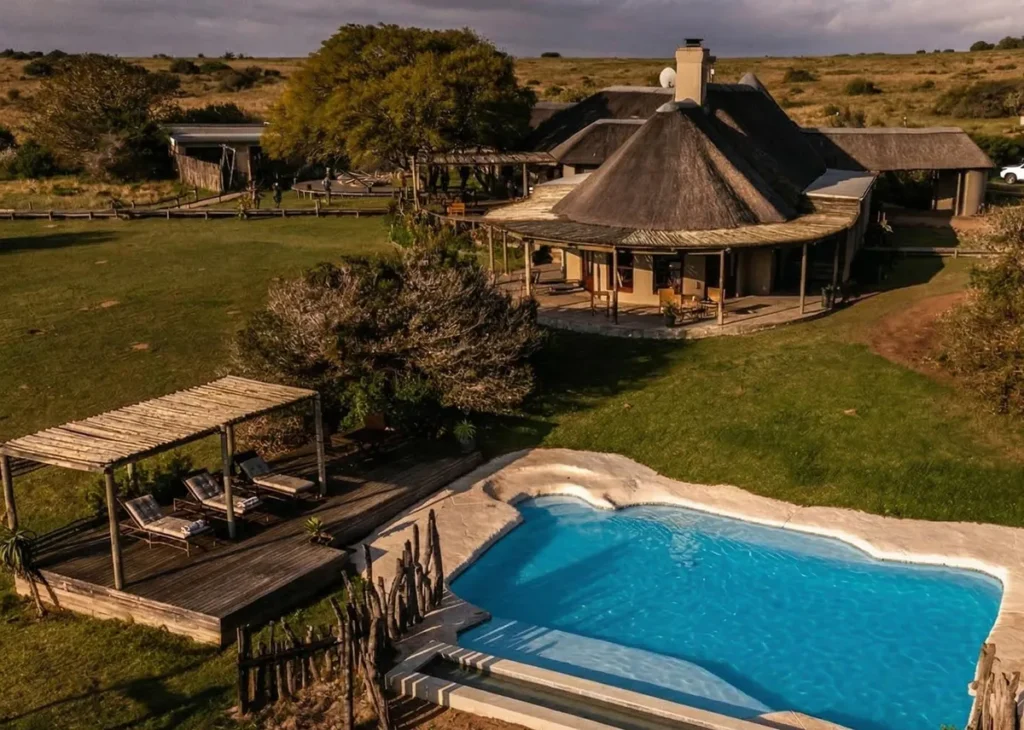
Induli Lodge — Midrange Excellence
Induli Lodge sits in the midrange bracket and punches above its price point. It is a solid choice for travellers who want inclusive game drives, comfortable accommodation, and a safari experience that does not require the exclusive-use premium. Rangers at Induli are experienced Eastern Cape guides with strong rhino-tracking credentials — the Eastern Cape’s white rhino population is one of the reserve’s defining wildlife draws and Induli’s location within the traversing area gives it good access.
Woodbury Manor — Exclusive-Use Heritage Estate
Woodbury Manor is Amakhala’s heritage property — a restored farmstead that offers exclusive-use accommodation in a setting that feels markedly different from classic bush camps. For groups who want private-use flexibility within a safari context, Woodbury Manor combines authentic Cape farm architecture with modern lodge amenities. It sleeps a small group and suits multi-generational families or friends travelling together who want the run of a private property rather than a shared lodge environment.
HillsNek Safari Camp — Best for the Classic Tented Experience
HillsNek Safari Camp is Amakhala’s classic East African-style tented option — open-fronted canvas tents set in the bush, closer to the sounds and rhythms of the reserve than the more enclosed lodge buildings. For experienced safari travellers who value atmosphere over amenity, HillsNek delivers a raw bush feel at a price that reflects the simpler format. It remains fully inclusive of game drives and all meals.
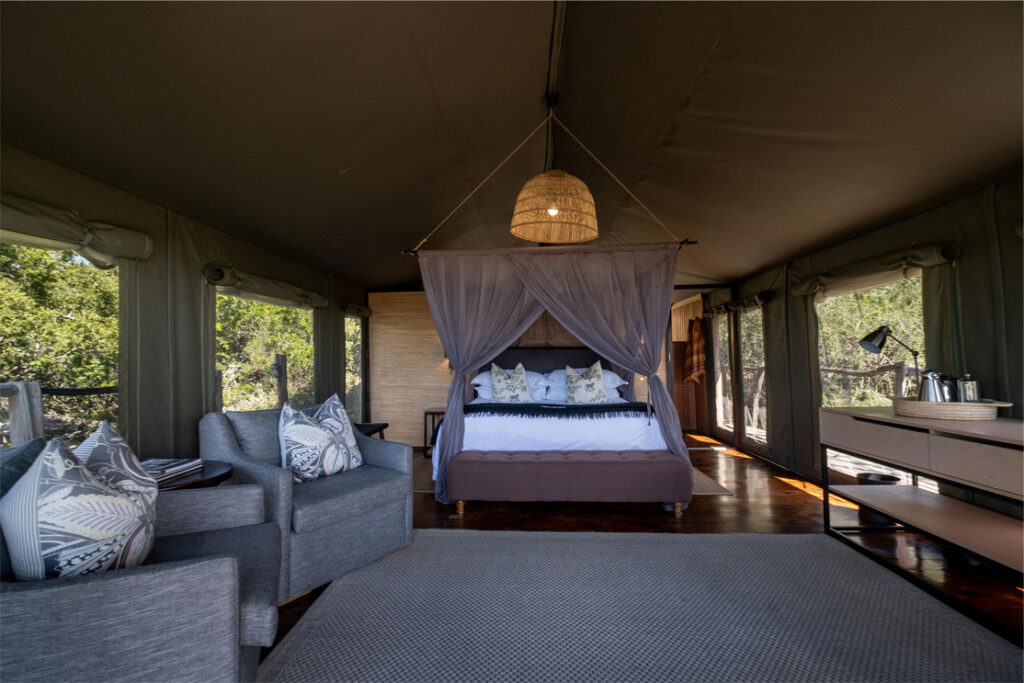
Quatermain’s 1920s Safari Camp — Retro Nostalgia Done Well
Quatermain’s 1920s Safari Camp occupies a deliberate design niche: a camp styled after the great early-twentieth-century hunting expeditions, with colonial-era canvas, lanterns, and hand-crafted furniture. It is a distinctive option for travellers who find the genre appealing, and it works particularly well for couples or small groups who appreciate the theatrical atmosphere. The game viewing is identical to the other Amakhala properties — the differentiation is entirely in the aesthetic.
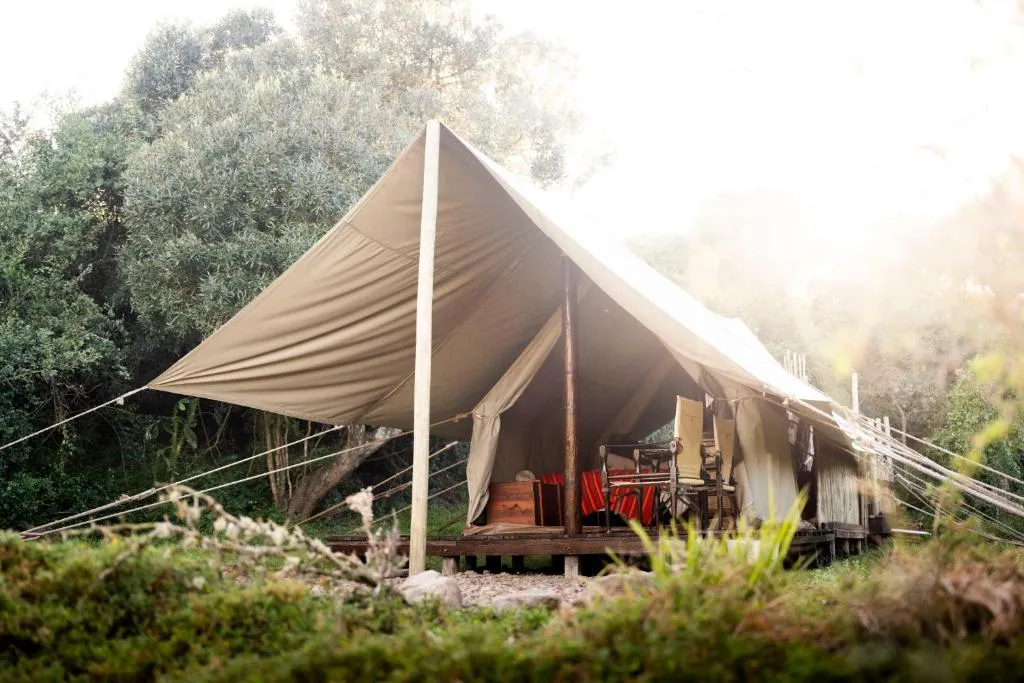
Amakhala Bush Lodge and Amakhala Safari Lodge
Amakhala Bush Lodge and Amakhala Safari Lodge represent the reserve’s more accessible price tiers without sacrificing the core experience. Both operate standard shared-game-drive formats with experienced rangers, inclusive meals, and the same traversing rights as the premium lodges. These properties make Amakhala reachable for first-time safari guests or budget-conscious travellers who nonetheless want genuine Big Five in a malaria-free environment.
Leeuwenbosch Country House — Farm-to-Table Comfort
Leeuwenbosch Country House brings a farm stay sensibility to the reserve. It is set on a working farm within the Amakhala property and combines game drives with farm walks, organic produce, and a more relaxed, countryside pace. It is especially popular with guests who want an Eastern Cape experience that extends beyond pure wildlife — suitable for a longer stay or for those adding a farm night to either side of a lodge safari.
Woodbury Lodge and Woodbury Tented Camp
Woodbury Lodge and Woodbury Tented Camp are the midrange and tented-tier entries within the Woodbury family of properties at Amakhala. Together with Woodbury Manor, they give the Woodbury section of the reserve three entry points at different price and comfort levels — useful when booking mixed groups who have different accommodation expectations or budgets.
What Wildlife Can You See at Amakhala Game Reserve?
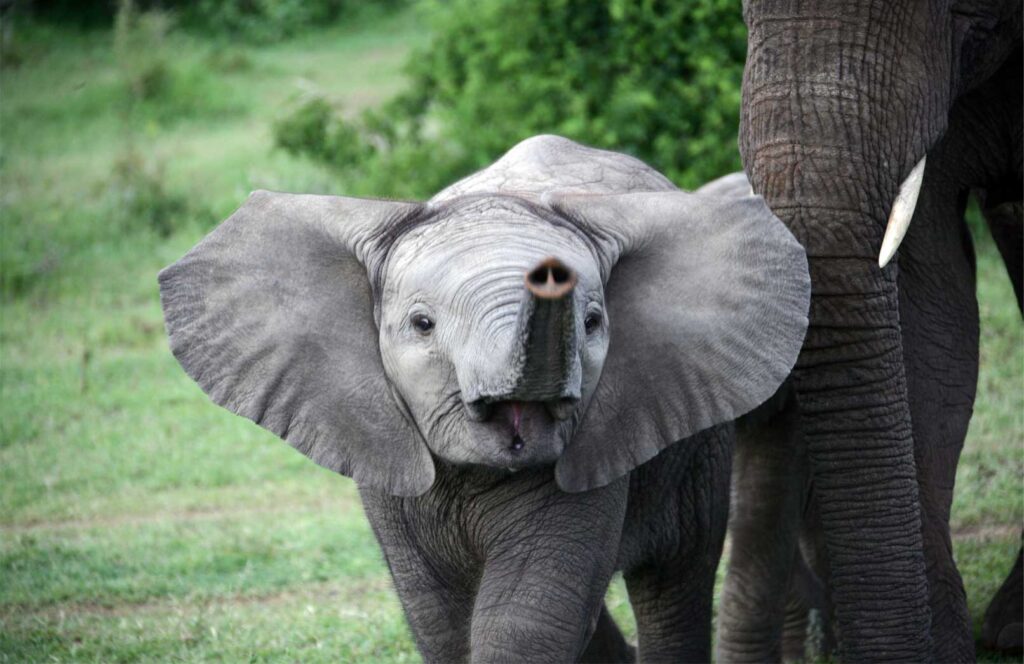
Amakhala carries a resident Big Five population: elephant, lion, leopard, white rhino, and Cape buffalo. All five species are present year-round on the reserve’s approximately 7,000 hectares. Because the reserve is compact rather than vast, rangers know the terrain and the animals well — individual animals are often recognisable and trackable across seasons.
The white rhino is a particular highlight. The Eastern Cape is nationally significant as a rhino conservation area, and Amakhala’s rhino population is one of the most consistently approachable in South Africa. Close encounters — vehicles within metres of rhino going about their routine — are regularly reported by guests across all lodges. This is the kind of sighting that is genuinely rare in the more heavily trafficked Sabi Sands or northern Kruger areas simply because sighting density there draws more vehicles.
Beyond the Big Five, Amakhala’s birdlife is exceptional. The reserve sits in the Eastern Cape’s transitional vegetation zone, which supports over 300 recorded bird species including the African fish eagle, martial eagle, southern ground hornbill, and a diverse range of raptors. Birding walks are available at several lodges and are increasingly popular with repeat safari guests who have already collected the Big Five and want a new dimension to the experience.
Cheetah, zebra, giraffe, wildebeest, and a broad diversity of antelope species round out the game-viewing portfolio. The reserve does not carry wild dog or large hyena populations at the density found in some Greater Kruger private concessions, but for the core Big Five experience — including excellent rhino viewing — Amakhala delivers consistently.
How Does Amakhala Compare to Kruger or Sabi Sands?
The three destinations serve meaningfully different traveller profiles, and the honest comparison requires acknowledging the trade-offs.
| Factor | Amakhala | Sabi Sands | Kruger NP |
|---|---|---|---|
| Malaria | ✅ Malaria-free | ⚠️ Low risk (prophylaxis advised) | ⚠️ Low risk (prophylaxis advised) |
| Area | ~7,000 ha | 65,000 ha | 1,948,500 ha |
| Big Five | ✅ All resident | ✅ All resident | ✅ All present |
| Nearest airport | Port Elizabeth (~45 min) | Skukuza / OR Tambo + transfer | Multiple Kruger airstrips |
| Leopard viewing | Good — resident population | Exceptional — among highest densities globally | Variable — sightings occur |
| Rhino viewing | Excellent — consistent close encounters | Good — occasional sightings | Good — white rhino present |
| Best pairing | Cape Town / Garden Route | Johannesburg / Mozambique coast | Johannesburg / Mozambique |
| Typical stay | 2–3 nights | 3–4 nights | 2–5 nights (self-drive or fly-in) |
The core insight is this: Amakhala is not trying to compete with Sabi Sands for leopard density. What it offers instead is a more accessible, malaria-free, child-safe Big Five experience that connects naturally to a Cape Town or Garden Route holiday. For families, first-time safari guests, or travellers with health considerations, Amakhala frequently wins the comparison outright.
When Is the Best Time to Visit Amakhala Game Reserve?
Amakhala is a year-round destination, which is one of its practical advantages over the Maasai Mara or the Okavango Delta, where a single “best” season strongly dominates. The Eastern Cape’s climate is temperate — summers (November to February) are warm to hot with occasional rainfall, and winters (May to August) are dry and cool to cold at night.
For game viewing, the winter dry season (June to September) is generally preferred. Vegetation thins as grasses dry out, water sources concentrate game on the remaining waterholes, and the cooler temperatures make early-morning game drives more comfortable. Visibility through the bush is at its best.
That said, the summer green season has its advocates: the reserve transforms dramatically with the rains, birdlife peaks (migratory species arrive), and newborn antelope appear across the plains. For photographers, the lush green backdrop and golden-hour light produce a distinctly different aesthetic. Accommodation rates are also typically lower in the summer months, making this the best value window without a meaningful sacrifice in the core Big Five experience.
The Eastern Cape does not experience the same dramatic seasonal wildlife movement as parks tied to the Great Migration — Amakhala’s resident Big Five population remains on the reserve throughout the year, so there is no “wrong” time to go.
How Do You Get to Amakhala Game Reserve?
Amakhala is accessed via Port Elizabeth (officially Gqeberha), the main gateway city of the Eastern Cape. The transfer from Port Elizabeth Airport to the reserve gates takes approximately 45 minutes by road — a short and straightforward drive through the Sundays River Valley.
Port Elizabeth is served by regular direct flights from Johannesburg (OR Tambo) and Cape Town on both Airlink and FlySafair, with flight times of around one hour. This means the reserve can be reached from Cape Town or Johannesburg in under two hours door-to-door — significantly faster and cheaper than flying into Kruger’s private airstrips.
The most logical itinerary structures for Amakhala are:
- Cape Town + Garden Route + Amakhala: Drive or fly the Garden Route from Cape Town to Port Elizabeth, then add 2–3 nights at Amakhala before flying home. This is South Africa’s most popular self-drive and fly-in combination.
- Johannesburg + Amakhala: A direct flight from OR Tambo to Port Elizabeth, with a short transfer to the reserve — a practical 3–4 night safari option without the hassle of Kruger’s gate queues or the cost of private concession fly-ins.
- Amakhala + Addo Elephant National Park: Addo, home to over 600 elephants and the only reserve in the world with the Big Seven (Big Five plus southern right whale and great white shark), is less than 90 minutes from Amakhala. A combination of both reserves gives travellers a genuinely remarkable Eastern Cape safari circuit.
What Is Included in an Amakhala Safari?
Across all eleven Amakhala lodges, the standard safari package is fully inclusive of the following:
- Twice-daily game drives — morning and afternoon/evening drives in open 4×4 vehicles with experienced registered rangers
- All meals — typically a full cooked breakfast post-morning drive, lunch, and a three-course dinner
- All non-alcoholic beverages — most lodges include alcoholic beverages in the rates; confirm at booking
- Night drives — offered by most lodges; nocturnal species including genet, bushbaby, and aardvark are encountered after dark
- Bush walks — led by armed and accredited walking guides at lodges that include this activity (confirm per property)
Activities not universally included: spa treatments, laundry (varies by lodge), and specialist birding guides (available on request at additional cost). Exclusive-use properties like Bukela Game Lodge and Woodbury Manor include private ranger and vehicle use as a matter of course — this is reflected in their rates rather than charged as a supplement.
FAQ — Amakhala Game Reserve Lodges
Is Amakhala Game Reserve malaria-free?
Yes. Amakhala Game Reserve is completely malaria-free. The Eastern Cape’s climate does not support viable malaria-transmitting mosquito populations, meaning no antimalarial prophylaxis is required. This is a major differentiator from Greater Kruger (Sabi Sands, Timbavati, Manyeleti), which all carry low-to-moderate malarial risk depending on season.
What Big Five animals can you see at Amakhala?
Amakhala carries all five of the Big Five — elephant, lion, leopard, white rhino, and Cape buffalo — on a resident, year-round basis. White rhino sightings are particularly reliable; the Eastern Cape is one of South Africa’s most important rhino strongholds, and close vehicle-to-rhino encounters are regularly achieved by experienced rangers who know individual animals within the reserve.
Which Amakhala lodge is best for families with young children?
Hlosi Game Lodge is consistently recommended for families with children of all ages. Unlike some safari reserves in other regions, Amakhala imposes no minimum age restriction (check per lodge at time of booking), and the malaria-free environment removes the medication concern for younger travellers. Bukela Game Lodge, when booked exclusively, is also excellent for family groups who want complete privacy.
How far is Amakhala from Port Elizabeth?
Amakhala Game Reserve is approximately 45 minutes by road from Port Elizabeth (Gqeberha) Airport. Port Elizabeth is served by regular direct flights from Johannesburg and Cape Town. No internal safari flight or charter is required — making Amakhala one of South Africa’s most accessible Big Five destinations in terms of total travel time from a major city.
What is the difference between Amakhala’s lodges?
All eleven Amakhala lodges traverse the same reserve and offer the same core Big Five experience. The key differences are in comfort level, group format, and price point: Bukela Game Lodge and Woodbury Manor offer exclusive-use private lodge experiences; Hlosi, Induli, and Amakhala Bush Lodge operate as shared-game-drive properties; HillsNek and Woodbury Tented Camp offer classic open tented formats at lower price points; Quatermain’s 1920s Camp is a boutique nostalgia option; and Leeuwenbosch Country House combines farm accommodation with safari drives.
Is Amakhala worth visiting for only 2 nights?
Yes — Amakhala is genuinely suited to a 2-night stay, which is one of its structural advantages over larger destinations. Because the reserve is compact (~7,000 ha) and the Big Five are resident and reliably found, guests can realistically expect to encounter all five species across two morning and two afternoon drives. A 3-night stay adds depth to the experience and increases the probability of more extended wildlife encounters, but 2 nights delivers a satisfying and complete safari.
Can you self-drive at Amakhala Game Reserve?
No. Amakhala Game Reserve does not permit private self-drive game viewing. All game drives are conducted in open 4×4 lodge vehicles with a registered and armed field guide. This is standard practice across South Africa’s private Big Five reserves and is part of what makes the experience safe — and the sightings more productive, since rangers use radio networks across the reserve to locate and share animal positions.
How does Amakhala compare to Shamwari or Kariega?
Shamwari, Kariega, Amakhala, and Kwandwe are all private Big Five reserves in the Eastern Cape with malaria-free status. The key differences are in scale, lodge philosophy, and price tier. Shamwari is the region’s largest and most commercially established reserve (over 25,000 ha); Kariega is known for its rhino welfare programme and river-based activities; Kwandwe is ultra-exclusive and among the most expensive in South Africa. Amakhala sits in the mid-tier, offering genuine Big Five at accessible prices across a range of lodge styles — making it the most versatile option for mixed groups, families, or first-time safari guests with a reasonable budget.
Plan Your Amakhala Safari
Amakhala Game Reserve is one of South Africa’s most practical and rewarding Big Five destinations: malaria-free, 45 minutes from Port Elizabeth, and home to eleven lodges that collectively offer every budget and travel style from private exclusive-use estates to classic tented camps. Whether you are adding a 2-night safari to a Cape Town road trip or building a dedicated Eastern Cape wildlife itinerary, the reserve delivers consistent, accessible game viewing without the costs or logistical complexity of a fly-in Kruger safari. ASG — the specialist luxury safari operator — has over a decade of experience placing guests at Amakhala’s lodges and can match you to the right property based on group size, travel dates, and the kind of experience you are looking for. Enquire now to start planning your Amakhala safari.